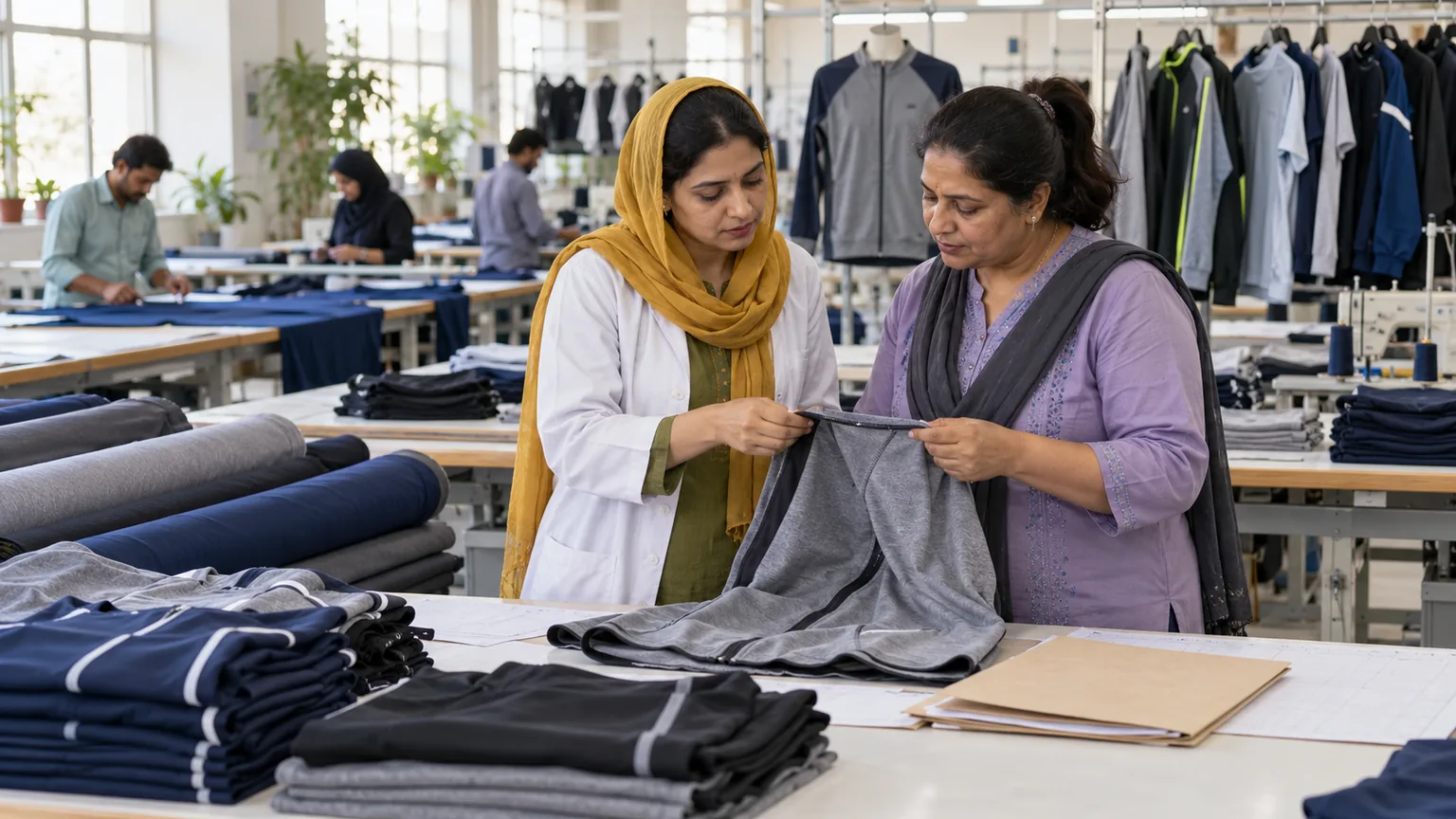
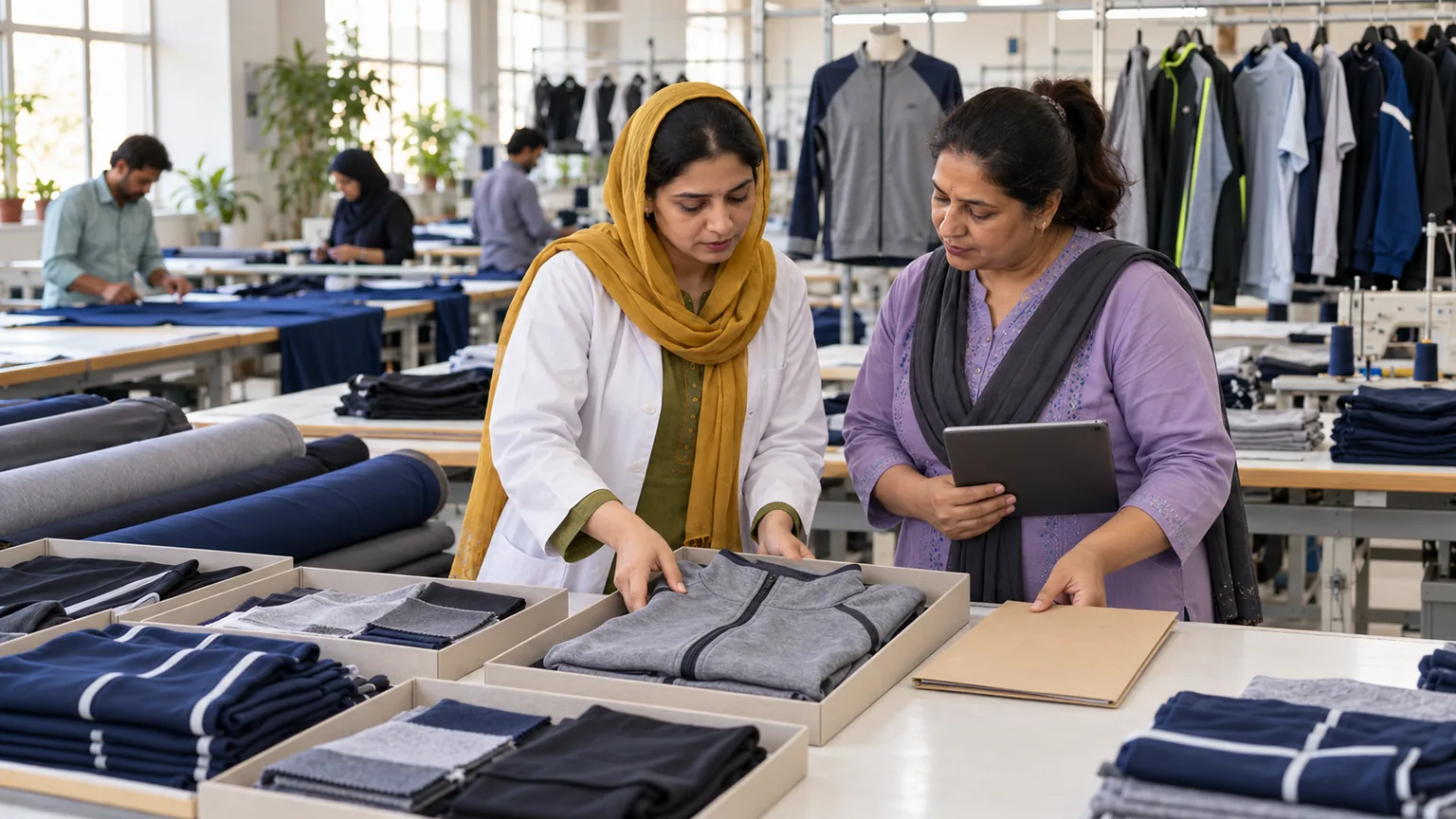
Export sales often depend on several rounds of specifications, samples and revised quotations before an order is confirmed. ALGONLP can assess an export RFQ CRM for textile and sportswear manufacturers that gives each enquiry a clear owner and next step. Keep the buyer’s requirements, sample decisions and approved commercial terms together through the sales cycle.
See missing RFQ details before preparing a quote.
Retain the buyer-approved sample version.
Hand over accepted terms with the order.
Illustrative workflow.
Workflow comparison
Before and after: how the workflow could change
Illustrative comparisons for a scoped implementation. The proposed workflow depends on agreed processes, supported integrations and staff use.
Shows the team what must be confirmed before a credible quote can be prepared.
Today
An overseas RFQ lacks quantity or fabric details, but the missing fields are lost in an email thread.
Proposed workflow
A proposed RFQ record shows required specifications and outstanding clarification tasks.
How it works
Sales assigns an owner; merchandising verifies technical and costing inputs before the quotation stage.
Provides a clear reference for the next quotation or production handover.
Today
Staff cannot tell which sample version the buyer accepted.
Proposed workflow
Each sample version retains its specification, dispatch reference and buyer feedback.
How it works
Record acceptance against the exact version and keep rejected or revised samples in the same restricted enquiry history.
Keeps commercial commitments and remaining questions attached to the order.
Today
An old quotation is forwarded to production without the latest trade terms or open conditions.
Proposed workflow
The accepted-order handover includes the approved quote and specification version.
How it works
Authorised staff verify price, currency, dates and terms; unresolved conditions remain visible to the receiving team.
Illustrative example
A practical end-to-end example
Illustrative example: an overseas buyer requests a sportswear sample but omits a fabric detail. Sales assigns the clarification to merchandising. The buyer reviews a second sample version, which is retained with feedback and the approved quotation. When the order is accepted, production receives that exact specification and any remaining commercial conditions.
Where long export sales cycles lose detail
RFQs arrive by email and messaging without consistent fields for fabric, quantity, destination and required dates.
Sales and merchandising teams cannot see which sample version the buyer reviewed or rejected.
Costing, quotation revisions and follow-up deadlines are held in separate spreadsheets.
Production receives a partial buyer history, increasing the chance of using an outdated specification.
Follow the RFQ through sample and order decisions
Capture the enquiry
Record buyer, product, quantity, specification, destination and requested date. Flag missing information for follow-up.
Assign commercial review
Give the RFQ a sales and merchandising owner. Confirm capability, minimum order quantity and costing inputs.
Track the sample
Retain drawings or authorised design files, sample versions, dispatch references and buyer feedback with the enquiry.
Issue a reviewed quotation
Save approved price, currency, trade terms, lead-time assumptions and validity against the correct specification.
Own the next action
Track clarification, sample approval and quotation follow-ups with dates and responsible staff.
Hand over the confirmed order
Pass the accepted specification and terms to the existing production or order system, preserving outstanding conditions.
What an export-sales pilot can deliver
The scope can include structured RFQ intake, buyer and contact history, sample tracking, quotation versions, follow-up queues and a sales-stage dashboard. Supported email or accounting/production connections are assessed during discovery.
The CRM can record capability and certification evidence where you have valid documentation. It does not establish production capacity, certification or compliance by itself.
AI drafts from verified buyer and factory information
AI may extract requirements and prepare multilingual reply drafts. Merchandisers verify technical specifications, costs, minimum quantities, capacity and dates. Authorised staff approve every quotation and trade commitment. Buyer designs require restricted access and agreed retention; they must not become public examples or be sent to third-party AI services without appropriate permission.
Is this a useful fit for your business?
A good fit is an exporter with repeat B2B enquiries, sample iterations and several people sharing sales and merchandising responsibility.
A low-volume seller may need a configured CRM. Production planning and fabric inspection are separate scopes; connect them only where the handoff has a clear operational purpose.
Pilot one product family and sales team
Define complete RFQ fields
Review enquiry, sample and quotation examples, then agree owners and commercial approval points.
Test a multi-version sale
Include missing specs, a rejected sample, a quotation revision and a delayed buyer reply.
Connect the order handover
Train the team and test accepted-order transfer before expanding products or integrations.
Agree the first release
Scope, migration and ongoing operation
What the agreed scope can include
Structured RFQs and buyer ownership
Sample and quote versions
Follow-up tasks and accepted-order handover
What needs separate scoping
Full factory planning and certification verification require separate specialist processes. Authorised staff must approve quotations and commercial commitments.
Data migration
Review active buyers, open RFQs, permitted design files, sample versions and quotation status before importing history.
Training and ongoing support
Train export sales and merchandisers on specification ownership, sample feedback and commercial approval. Agree support hours, issue ownership, backups, recovery checks and change-request terms before rollout.
Useful answers
Questions and answers
Can we track several sample versions for one buyer?
Yes, that can be a core record. Each version should retain its specification, dispatch detail, feedback and acceptance status.
Can AI answer overseas buyers in different languages?
It can prepare drafts from approved information. Your staff review meaning, specifications and commercial terms before sending; language quality needs testing with representative enquiries.
Will this replace our factory ERP?
Usually the first goal is organised sales and sample tracking. A production-system connection depends on supported access and an agreed accepted-order handover.
How do we protect customer designs?
Define file access, retention and permitted processing before importing them. Use redacted examples in discovery and restrict any external AI processing to approved data.
What determines the project cost?
Enquiry channels, product specification complexity, sample tracking, permissions, historical files and ERP/email connections shape the estimate. Translation testing and ongoing operating costs are scoped explicitly.
When could we go live?
We set a phased schedule after discovery and access checks, rather than promise a date before scope is known. A rollout date depends on agreed RFQ fields, permitted files and a tested multi-version quotation-to-order handover. Start with the agreed pilot and expand after sign-off.
Discuss a focused first step
Bring one enquiry that took several rounds
Show us how specifications, samples and quotations move between sales and merchandising. A redacted enquiry thread can reveal a useful first scope.